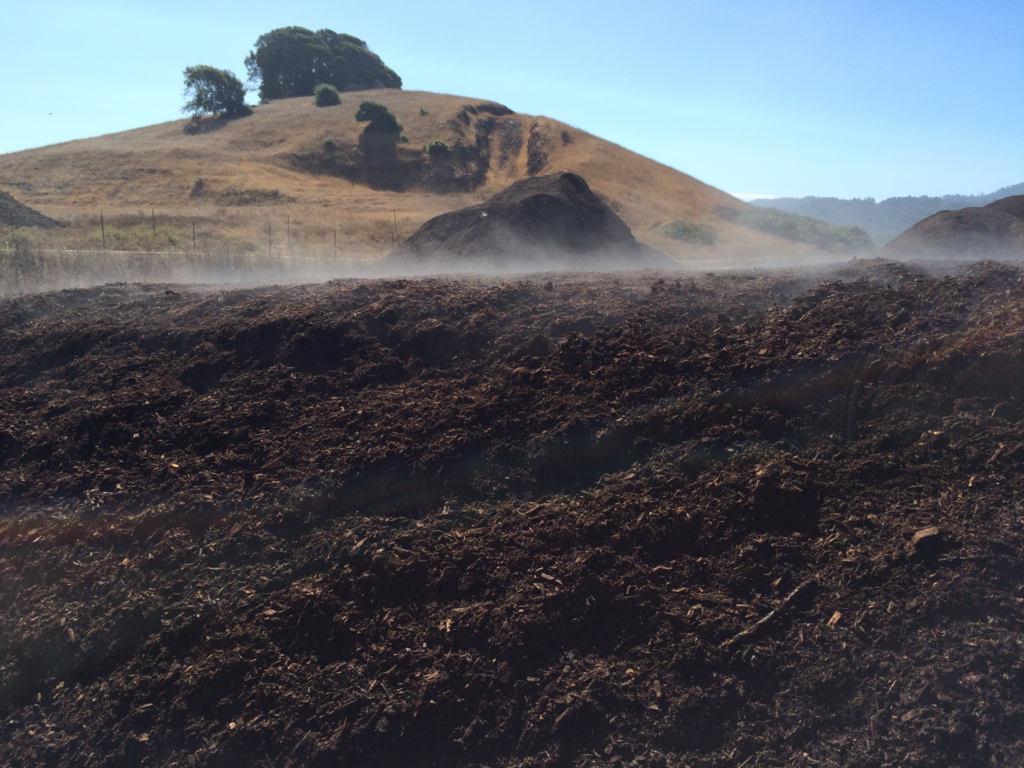
Measuring emissions from composting systems
Composting provides a variety of environmental benefits, including prevention of greenhouse gas emissions, nutrient recycling, carbon sequestration, and increased soil water retention. We conduct research at the lab and field scale, seeking to better quantify greenhouse gas and other emissions from composting systems, at varying scales, and using different feedstocks.
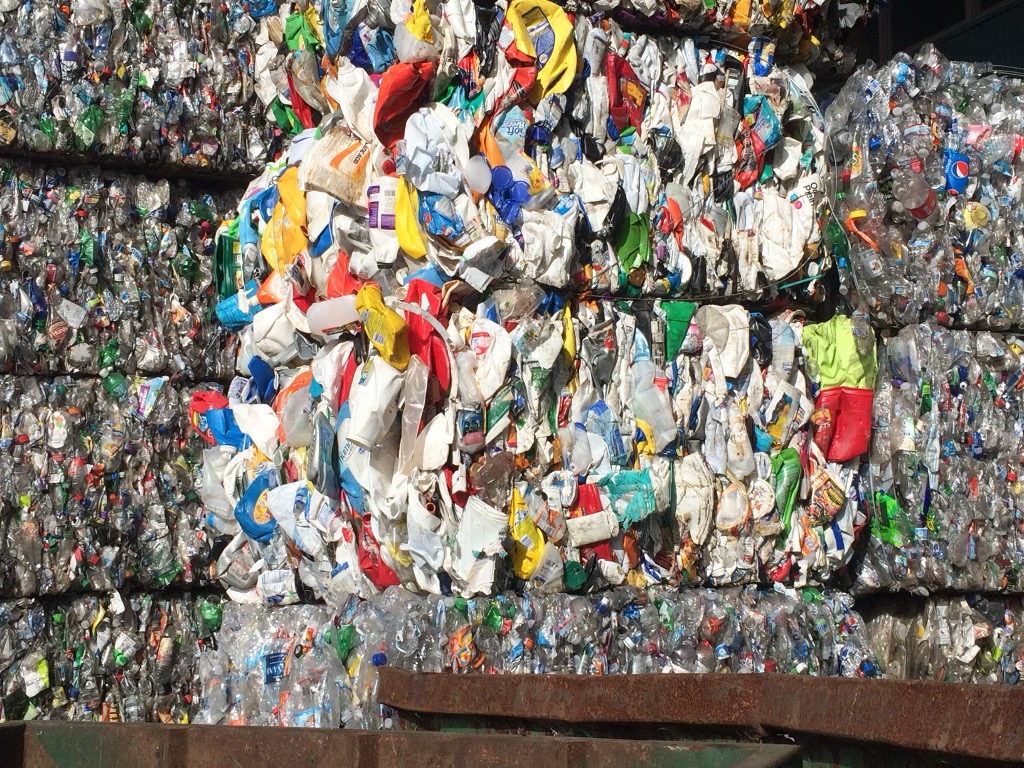
Modeling alternative uses of “wastes”
We use lifecycle assessment modeling to model the environmental and health benefits and costs of alternative uses of solid wastes.
Peer-reviewed publications
15. Burton-Tauzer R, Vergara SE, and K Fingerman. 2026. Carbon underground: modeled and empirical soil organic carbon accumulation due to on-farm practices. Under review, Environmental Research Letters.
14. Perez T, Vergara SE and WL Silver. 2023. “A micrometeorological mass balance (MMB) approach for quantifying greenhouse gas emissions from food waste composting” Scientific Reports, 13:7608. https://doi.org/10.1038/s41598-023-34174-z
13. Geronimo CJ, Vergara SE, Fingerman KF and C Chamberlin. 2022. Overlooked emissions: methane generation from woody biomass storage. Fuel. 319. https://doi.org/10.1016/j.fuel.2022.123839
12. Vergara SE and WL Silver. 2019. Greenhouse gas emissions from windrow composting of organic wastes: Patterns and emissions factors. Environmental Research Letters 14(12). https://doi.org/10.1088/1748-9326/ab5262
11. Silver WL, Vergara SE, and A Mayer. 2018. Carbon Sequestration and Greenhouse Gas Mitigation Potential of Composting and Soil Amendments on California’s Rangelands. California’s Fourth Climate Change Assessment, California Natural Resources Agency. Publication number: CCCA4-CNRA-2018-002.
10. Harden JW, Hugelius G, Blankinship J, Bond-Lamberty B, Lawrence C, Loisel J, Malhotra A, Nave L, Ogle S, Phillips C, Ryals R, Todd-Brown K, Vargas R, Vergara, SE et al. 2017. Networking our science to characterize the state, vulnerabilities, and management opportunities of soil organic matter. Global Change Biology 24 (2): e705–18. https://doi.org/10.1111/gcb.13896
9. Vergara SE, Gomez D, A Damgaard. 2016. “The Efficiency of Informality: Quantifying Greenhouse Gas Reductions from Informal Recycling in Bogotá, Colombia.” Journal of Industrial Ecology, 20(1): 107-119. https://doi.org/10.1111/jiec.12257
8. Martin EW, Chester MV, Vergara SE. 2015. “Attributional and Consequential Life-Cycle Assessment in Biofuels: A Review of Recent Literature in the Context of System Boundaries.” Current Sustainable/Renewable Energy Reports 2 (3): 82–89. https://doi.org/10.1007/s40518-015-0034-9
7. Gallegos JB and SE Vergara. 2014. “Urban sustainable development: Re-envisioning the city of 2025.” in J. Warren Evans and Robin Davies (Eds). Too Global to Fail: The World Bank at the Intersection of National and Global Public policy in 2025. dx.doi.org/10.1596/978-1-4648-0307-9
6. Vergara SE, G Tchobanoglous. 2012. “Municipal Solid Waste and the Environment: A Global Perspective.” Annual Review of Environment and Resources. 37:2.1-2.33. 10.1146/annurev-environ-050511-122532
5. Vergara SE ,“Composting,” In Rathje W, J Golson. 2012. Encyclopedia of Consumption and Waste. Thousand Oaks, CA: SAGE publications Inc., 137-140. https://doi.org/10.4135/9781452218526.n58
4. Vergara SE , “Incinerators,” In Rathje W, J Golson. 2012. Encyclopedia of Consumption and Waste. Thousand Oaks, CA: SAGE publications Inc., 411-414. https://doi.org/10.4135/9781452218526.n163
3. Vergara SE , “Worms (for composting) In Rathje W, J Golson. 2012. Encyclopedia of Consumption and Waste. Thousand Oaks, CA: SAGE publications Inc., 1007-1009. https://doi.org/10.4135/9781452218526.n385
2. Vergara SE, Damgaard A, A Horvath. 2011. “Boundaries Matter: Greenhouse Gas Emission Reductions from Alternative Treatment Strategies for California’s Municipal Solid Waste.” Resources, Conservation, and Recycling, 57: 87-97. https://doi.org/10.1016/j.resconrec.2011.09.011
1. Lemoine D, Plevin R, Cohn A, Jones A, Brandt A, Vergara SE, D Kammen. 2010. “The climate impacts of bioenergy systems depend on market and regulatory policy contexts.” Environmental Science and Technology, 44 (19):7347–7350. https://doi.org/10.1021/es100418p